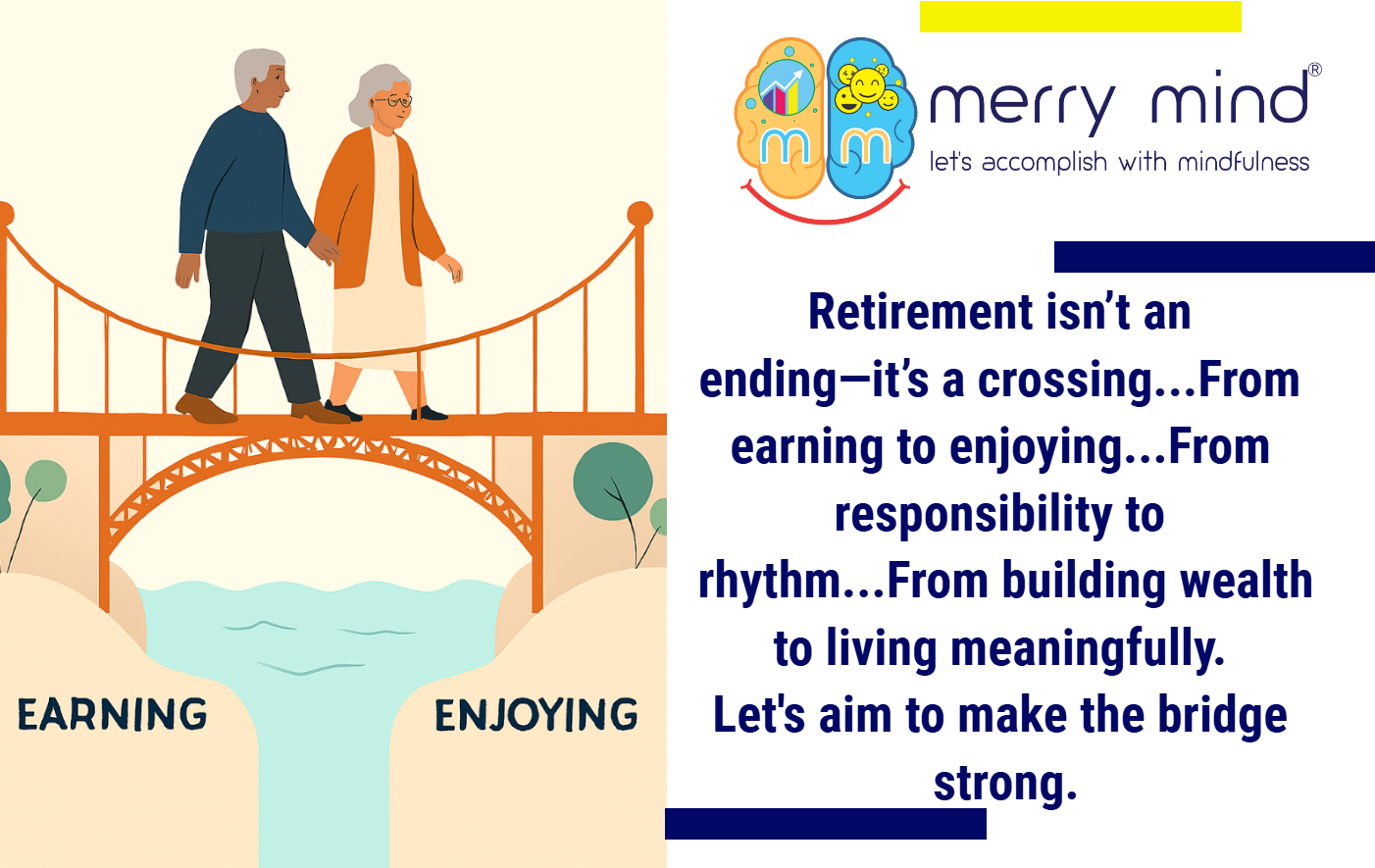

Retirement is not the end of financial responsibility — it is the beginning of a completely new financial chapter. For millions of Indians who have spent decades earning, saving, and investing, the post-retirement years bring a fresh set of challenges that demand careful thought and deliberate planning. Financial Planning for senior citizens in India is no longer optional — it is essential.
Whether you retired last year or are approaching retirement in the next few months, this guide is written for you.
The human side of retirement isn’t just about numbers—it’s about identity, security, and meaning.
The Emotional Shift
- Loss of structure: Work provides routine, purpose, and social interaction. Retirement can feel liberating, but it also leaves many wondering, “Who am I now?”
- Redefining success: Instead of promotions or pay checks, fulfilment comes from relationships, hobbies, and health. Financial planning becomes about supporting those values.
- Fear of depletion: Even with savings, many retirees worry about “running out.” This anxiety isn’t just financial—it’s deeply tied to the human need for safety and continuity.
Why Senior Citizens Need a Separate Financial Plan
After retiring, your income is fixed or limited. Your expenses — especially healthcare — are rising. Inflation quietly erodes the value of your savings every single year. And unlike a 35-year-old, you may not have the luxury of time to bounce back from a poor financial decision.
This is exactly why as a Fee Only Financial Planner in Kolkata, I strongly trust that financial planning for senior citizens must be approached differently, with far greater care, clarity, and personalization.
The Key Financial Challenges Retired Indians Face
- Outliving Your Savings: With life expectancy in India steadily rising, a person retiring at 50 or 60 may need to fund 25 to 45 years of post-retirement life. Most people significantly underestimate this duration when building their retirement corpus.
- Rising Healthcare Costs: Medical inflation in India runs at approximately 14% per year — nearly double the general inflation rate. Without adequate health insurance and a dedicated medical fund, a single hospitalization can wipe out years of savings.
- Inflation Eroding Purchasing Power: A monthly expense of ₹50,000 today will feel like ₹1,00,000 in roughly 10 years at a 7% inflation rate. Senior citizens who park all their money in fixed deposits or savings accounts often find their lifestyle quietly shrinking over time.
- Over-Dependence on a Single Income Source: Many retirees depend solely on pension, interest from fixed deposits, or rental income. This single-source dependency is risky and leaves little room for unexpected expenses.
- Vulnerability to Mis-selling: Senior citizens are frequently targeted by agents pushing insurance-cum-investment products, high-commission mutual funds, or unsuitable schemes. Without proper guidance, well-meaning retirees often end up with products that serve the seller more than the buyer.
What a Sound Financial Plan for Senior Citizens Should Cover
-
Cash Flow Planning
As a Certified Financial Planner in Kolkata, I accept that the first priority is ensuring a steady, predictable monthly income that covers all living expenses comfortably. This involves mapping your income sources — pension, interest income, rental income, dividends — against your monthly and annual expenses, including healthcare, household, travel, and lifestyle needs.
-
Healthcare Planning
A comprehensive health insurance policy is non-negotiable. Beyond insurance, senior citizens should maintain a dedicated medical corpus — a liquid reserve specifically for healthcare emergencies that insurance may not cover fully, such as co-payments, uncovered treatments, or home care.
-
Lifestyle & Leisure Planning
Retirement should be more than financial survival — it should be about thriving. As a SEBI Registered Investment Adviser in Kolkata, I believe that a sound plan must include space for joy, exploration, and relaxation. This means:
- Travel goals: Setting aside funds for domestic or international trips, pilgrimages, or family visits.
- Hobbies & passions: Whether it’s gardening, music, art, or volunteering, allocate resources to nurture personal interests.
- Wellness & recreation: Budgeting for fitness classes, retreats, or simply the freedom to enjoy dining out and social activities.
- Celebrations & family time: Planning for birthdays, anniversaries, and family gatherings ensures emotional wealth alongside financial security.
-
Asset Allocation Suitable for Your Life Stage
The common belief that senior citizens should only invest in “safe” fixed-income instruments is outdated. With a 25 to 30-year retirement horizon, some exposure to equity helps beat inflation over the long term. The right asset allocation depends on your personal risk profile, health, dependents, and existing corpus — not age alone.
-
Contingency Fund
Even in retirement, maintaining a liquid contingency fund equivalent to at least 12 months of expenses is wise. Life brings surprises — a sudden home repair, a family emergency, or an unexpected medical need — and having liquid reserves means you don’t have to break long-term investments at the wrong time.
-
Estate and Succession Planning
As a practicing Financial Advisor in Kolkata, I have observed a pattern. Many senior citizens have accumulated significant assets over a lifetime — property, investments, bank accounts, insurance policies — but have not organized them properly. A clear will, updated nominations across all accounts and policies, and family communication about financial matters can prevent enormous hardship for your loved ones later.
-
Tax Planning
Senior citizens and super senior citizens (above 80) enjoy higher basic exemption limits and specific tax benefits in India. A Financial Plan should actively incorporate tax-efficient investment structures to ensure you retain more of what you earn.
A Few Words for Families of Senior Citizens
If your parent or elderly relative does not have a structured financial plan, this is the right time to help them put one in place. Many senior citizens are hesitant to seek financial help, either out of self-reliance or a lack of awareness about the kind of professional support available.
Encourage them to consult a qualified, fee-only SEBI Registered Investment Adviser who specializes in retirement and senior citizen financial planning. It is one of the most meaningful things you can do for someone who spent a lifetime building financial security for your family.
Retirement should be a time of peace, dignity, and freedom — not financial anxiety. But peace of mind does not happen by accident. It is the result of deliberate, well-structured financial planning for senior citizens that addresses income, healthcare, inflation, taxes, and legacy in a holistic and personalized manner.
If you are a retiree or approaching retirement and would like to explore how a structured financial plan can bring clarity and confidence to your post-retirement life, reach out to a SEBI Registered Investment Adviser for an unbiased, fee-only consultation.
Your retirement deserves a plan — not just a product.