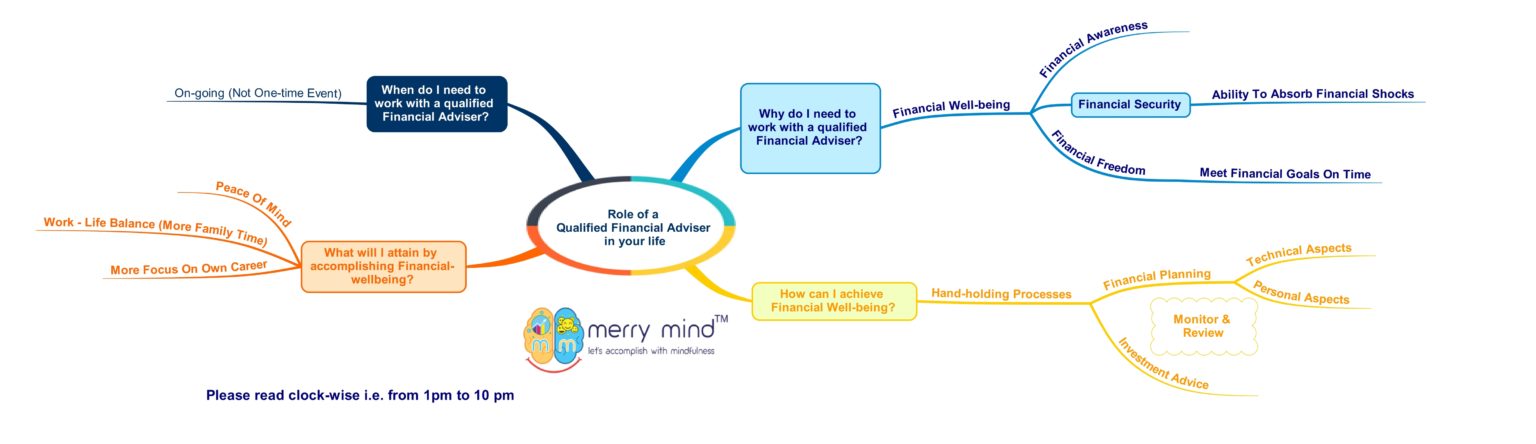
Nothing in this world truly comes for free. That so-called “free advice” you receive may not be free at all—it simply means you aren’t paying directly. Unfortunately, many people overlook the hidden costs involved.
Agents, brokers, distributors, and bank relationship managers are not financial advisors. Their suggestions are often driven by product sales rather than your overall financial situation. They rarely consider your unique circumstances, emphasize only the positives, and ignore the downsides. As a result, when you invest without full awareness of product features, you risk losses. Such advice is neither unbiased nor always reliable, as it is commission-based.
Even online sources like Google only provide generic opinions, which may or may not suit your specific needs.
At MERRY MIND, led by Arijit Sen, a SEBI Registered Investment Advisor (Registration No.: INA300012723) and fiduciary, we are committed to acting solely in your best interest. We do not distribute financial products and therefore earn no commissions or brokerages. Our model is entirely fee-only, ensuring that our guidance remains impartial and ethical.
Too often, lack of awareness leads to poor financial decisions. This is where a trusted, fee-only financial advisor can provide unbiased direction and help you make sound, informed choices for your future.
Get in touch
- What is Investment Advice?
- How do we give investment advice?
- Why will you work with a Fee-only Investment Advisor?
Investment advice is any unbiased and subjective recommendation(s) or guidance that you may expect from a fee-only Financial Advisor. The practice of investment advising encompasses understanding the client’s personal aspects, client’s risk profile, client’s financial goals (including objective of investment, time horizon of investment, etc.), macroeconomic factors and thereby providing suitable recommendations.
Only professionals registered with SEBI for the role of Investment Advisor are entitled to give investment advice.
Under the banner MERRY MIND, Arijit Sen, being a SEBI Registered Investment Advisor in Kolkata (Registration No.: INA300012723), gives unbiased solutions as we work in fiduciary capacity. Since we strictly follow a fee-only model in our profession. There is no question of conflict of interest.
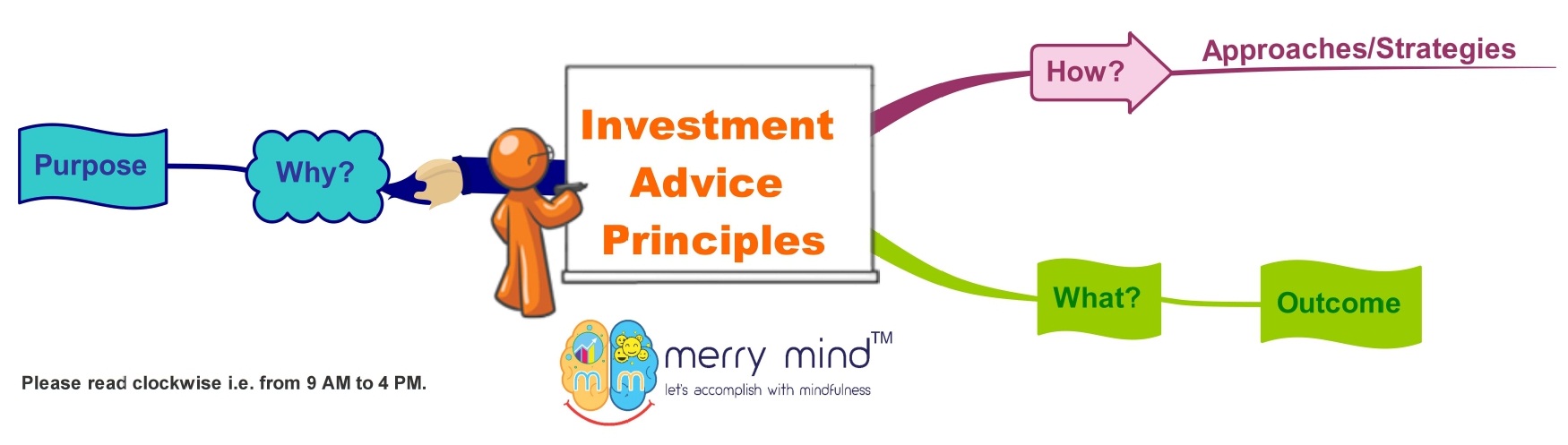
Investment Advice Principles
We understand the client’s aspirations. We help our clients to give shape to their goals & objectives. This would lead us to offer solutions that meet their requirements. As Certified Financial Planner in Kolkata, we do not follow unrealistic approaches while providing investment advice. Hence, we gather exhaustive information from our client regarding their personal life, expectations, goals and financial position, etc. Risk Profiling remains the cornerstone of the entire journey. Based on this, we would need to figure out what needs to be done for our client. We would first need to establish the feasibility of achieving the goals in the time-frames desired. We can go ahead only if it can be established rationally. Thorough analyses of both quantitative and qualitative inputs are done before arriving at suitable unambiguous recommendations.
As Financial Advisor in Kolkata, we constantly educate our clients regarding the processes we follow. This gives them a sense of security and they know where they are heading to in their quest of achieving financial independence.
We all are aware that nothing is free in this world. Hence, the “free advice” you think you are receiving, may not be free at all! It is just that you are not paying directly. Unfortunately, most people do not realize the indirect cost borne.
Agents/Brokers/Distributors/Bank Relationship Managers cannot give financial advice. Whatever they say is concentrated to pushing their products without any real understanding of your unabridged picture. They do not consider your specific situations. Also, they highlight only the sunny side of the products. Hence, when you buy/invest in such products without knowing exact features, you end up burning your fingers. Such “advice” may neither be of great quality nor would it be conflict-free. They operate on commissions based on products sales.
From Google, you may get generalized statements/ opinions which may/ may not suit your unique needs.
Under the banner MERRY MIND, Arijit Sen is a SEBI Registered Investment Advisor (Registration No.: INA300012723) & Fiduciary. We are ethically driven to only think of your best interests all the time. You can be sure that we don’t distribute products. Thus we do not receive any commissions/brokerages from any product manufacturers.
While our innocence becomes our ignorance, we take inapt resolutions in our personal financial issues. This is where a fee-only Financial Advisor will impartially guide you through.
The doctor prescribes the medicines after discussing the illness with the patient. The chemist just dispenses the medicine prescribed. Similarly a SEBI Registered Investment Advisor will consider quantitative and qualitative inputs before recommending a required solution for his client. On the other hand, Agents/Brokers/Distributors/Bank Relationship Managers will just sell financial products.
The following personal factors like your age, physical & mental health, income, expenses, your qualifications, emotions & feelings, decisions, experience, your culture & society where you live, your knowledge about personal finance etc. may influence your personal finance. Considering all these parameters, hiring an unbiased Financial Advisor will make your journey towards financial wellness less bumpy.
In-Depth Financial Assessment

Stage 1:Goal Setting & Prioritization
Effective financial investment begins with clear goal setting and prioritization. Define short-, medium-, and long-term objectives, then align investments with risk tolerance and timelines. Prioritize essentials like emergency funds and debt repayment before pursuing growth opportunities. This structured approach ensures discipline, minimizes risk, and maximizes wealth-building potential.

Stage 2:Risk Management
Risk management in financial investment involves identifying, assessing, and mitigating potential losses. Diversification across assets, setting stop-loss limits, and aligning investments with risk tolerance are key strategies. Regular portfolio reviews help adapt to market changes. Effective risk management protects capital, reduces volatility, and supports steady long-term growth.

Stage 3:Investment Portfolio Creation
Investment portfolio creation involves strategically allocating assets across stocks, bonds, and alternatives to balance risk and return. Consider financial goals, time horizon, and risk tolerance when selecting investments. Diversification is essential to minimize losses and optimize growth. A well-structured portfolio supports stability, adaptability, and long-term wealth accumulation.

Stage 4:Professional Investment Assistance
Professional investment assistance provides expert guidance in navigating complex financial markets. Advisors help define goals, assess risk tolerance, and design tailored strategies. They offer insights on diversification, tax efficiency, and portfolio adjustments. Leveraging professional expertise enhances decision-making, reduces costly mistakes, and improves the likelihood of achieving long-term financial success.

Stage 5:Reporting/ Backoffice Support
Reporting and backoffice support in financial investment ensure accuracy, transparency, and efficiency. They handle trade settlements, compliance, record-keeping, and performance reporting. Reliable support systems provide investors with timely insights, minimize errors, and maintain regulatory adherence. Strong backoffice operations enhance trust, streamline processes, and enable informed decision-making for sustainable portfolio growth.

Stage 6:Review
Review in financial investment involves regularly assessing portfolio performance, goals, and risk alignment. It ensures strategies remain effective amid market shifts and life changes. Periodic reviews help rebalance assets, optimize returns, and address emerging risks. Consistent evaluation strengthens financial discipline and supports sustainable progress toward long-term investment objectives.